
Plugging a new electric vehicle (EV) into a regular garage outlet and watching it gain a handful of miles an hour gets old in about a week, especially when winter driving and a long commute already eat into your range. BK Electric solves that with proper EV charger installation for drivers in and around Bozeman, MT. We look at what your panel can support, put in a circuit built for the job, and set you up to leave the house each morning with a full battery.
Family-owned and based in Bozeman, MT, BK Electric has spent years wiring homes and small businesses. Charging equipment has become an increasingly important part of that work, and we install equipment from every major brand for residential garages, driveways, and small commercial properties. Our scope covers dedicated circuits, breaker capacity, and a single crew that handles the panel work a charger depends on, so the entire job is handled from start to finish.
Most people start by doing exactly what the dealership suggested: plugging into a standard household outlet in the garage and letting the car charge overnight. That works well enough at first, and then reality sets in. Level 1 charging adds roughly three to five miles of range per hour, so a battery that's run down to 20% needs the better part of two days to fill back up. Squeeze in a cold snap, a spontaneous drive to Big Sky, or a couple of days of errands, and you end up planning your week around the charging cable.
The reason comes down to how little a standard outlet can actually deliver. A typical 120-volt receptacle sits on a 15- or 20-amp circuit shared with lights, tools, the garage fridge, and whatever else got wired into that run over the years. Pulling continuous current through it for 12 hours straight is asking a lot from a circuit that was never designed for that kind of steady draw, which is why some homeowners notice warm cords or the occasional tripped breaker. Getting real charging speed requires a 240-volt circuit dedicated to the car alone, and older panels around here often don't have the room or capacity to support one.
Sorting that out is a straightforward process on our end. A licensed electrician from our team starts by inspecting your panel, calculating the existing load, checking the available amperage, and confirming there's space for a new double-pole breaker. We talk through where you want the unit mounted, how far that is from the panel, and which charger you're planning to use, since the model affects the circuit size. After that comes a written estimate, permits, and scheduling. On install day, we run the conduit and wire, land the dedicated 240-volt circuit, mount and connect the charger, and test the whole thing with your vehicle plugged in so you can watch it work before we head out. If your panel turns out to be short on capacity, we handle that upgrade too rather than sending you to someone else.
Once it's finished, charging becomes something you don't think about. A Level 2 setup typically adds 20 to 40 miles of range per hour, so plugging in after dinner means a full battery by breakfast no matter how much driving the day involved. Handling the wiring correctly also protects your home, since EV chargers pull steady current for hours at a stretch and deserve a circuit built for exactly that. Drivers tend to tell us the same thing afterward: they wish they'd done it the month they bought the car.
Here's a closer look at the EV charging work we handle for homes and businesses around the Bozeman area.

Businesses adding chargers for staff or customers have a few extra factors to weigh, including placement, capacity, and how many vehicles can plug in at once. As an electric vehicle charging station contractor, we help small commercial properties plan and install their setup without disrupting daily operations.
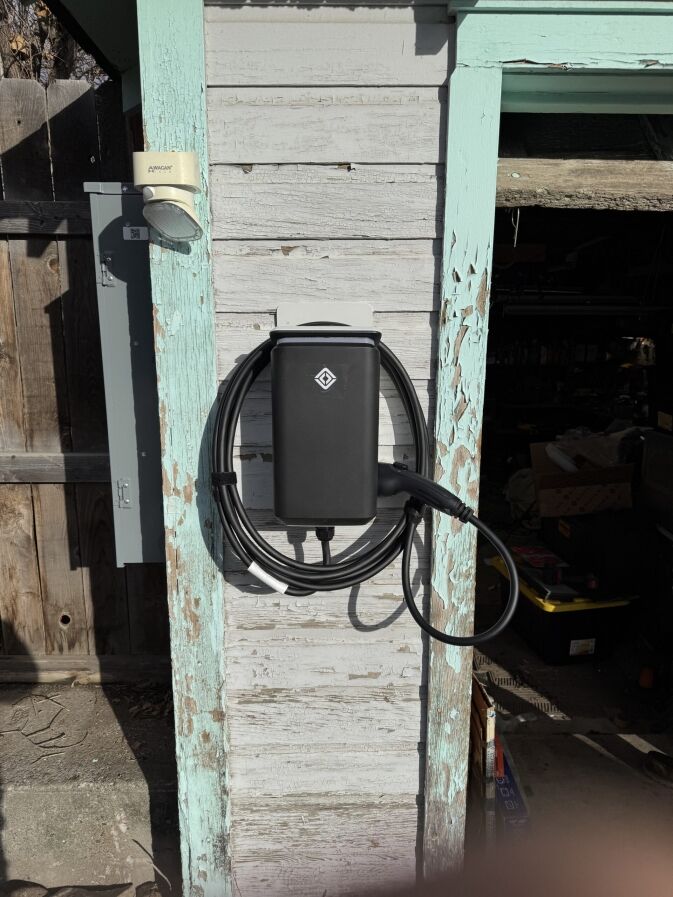
Home charging is where most electric vehicle chargers end up, and getting it right means matching the equipment to your panel, parking spot, and driving habits. We handle the full electric vehicle charger installation from the breaker to the final test, leaving you with a clean, code-compliant setup.
A charger needs its own circuit, sized for the unit and running straight back to the panel. Putting in a dedicated line keeps your charging steady and prevents breaker trips caused by sharing a circuit with everything else in the garage.
Some panels simply don't have the space or amperage to accommodate a charger as-is. Adding capacity or replacing an outdated panel clears the way for charging while leaving room for anything else you might add down the road.
Garage installations are the most common request, though many homes need a unit mounted outside near a driveway or carport. Outdoor setups call for weather-rated equipment and proper sealing, both of which we handle so Montana winters don't shorten your charger's lifespan.
Every manufacturer does things a little differently, and we work with all of them rather than pushing one brand. Bring us whatever unit you've chosen, and we'll get it wired and running, including EV charger replacement if an older one fails or you upgrade to a faster one.
Level 2 charging operates at 240 volts and significantly speeds up your vehicle's refueling, cutting an overnight job down to a few hours. Most homeowners find that this single change makes owning an electric vehicle far more practical.
ChargePoint units are a popular pick for their app features and flexible scheduling options. Proper mounting and wiring ensure the unit delivers the connected features it promises, with no surprises during setup.
Tesla Wall Connectors have their own wiring specifications and commissioning steps. Following those details closely ensures your unit reaches full charging speed and communicates as it should.
Wallbox units pack a lot of capability into a compact housing, which makes them a good fit for tighter garages. Proper mounting and circuit sizing let the unit deliver its rated output without straining anything upstream.
Keeping a home safe and comfortable takes a fair bit of wiring behind the scenes, and our residential electrical services look after all of it, from repairs and troubleshooting to maintenance, home inspections, safety upgrades, and service upgrades. Ceiling fans, outlet and switch installs, smoke detectors, dedicated circuits, and AC and mini-split work are all things we take care of to keep your place running right.
Steady power keeps a business on track, and our commercial electrical services provide that footing with troubleshooting and fast electrical help when things go awry. Lighting repairs and upgrades, remodeling, tenant improvements, panel upgrades, and code corrections all come together to make spaces safer and easier to operate.
Wiring problems tend to strike without warning, and our electrical repairs and service calls are built to handle them, covering power loss troubleshooting, tripped breakers, flickering lights, circuit diagnostics, and inspections. Sorting out faulty outlets and switches, or replacing a worn ground-fault circuit interrupter (GFCI), gets your home back to safe, steady power in a hurry.
Modern living puts a heavier load on the wiring, and our electric panel upgrades and service upgrades keep things current with panel replacements, 100-amp to 200-amp jumps, 200 to 400-amp increases, Leviton installations, and room to grow. Adding an EV charger, a hot tub, or a sauna typically calls for beefier circuits, and setting that up is squarely in our wheelhouse.
Riding out a blackout is a whole lot smoother with backup power waiting in the wings, and our generator installation service delivers whole-home generators, standby units, backup power systems, and dependable storm prep. As a Generac-authorized dealer focused on residential generators, we help homeowners prepare long before the power ever drops.
A ground-up build is the perfect opportunity to wire everything correctly, and our new construction electrical work covers multifamily, commercial, and residential projects alike. Complete installation, home wiring, full electrical systems, new panels, smoke detectors, lighting, outlets, switches, and garage wiring all get carried through from the first stud to the final inspection.
A remodel throws open the walls and gives our electrical remodeling and additions a great shot at updating the wiring, whether that's kitchen and bathroom remodel wiring, basement finishing, or home additions. Moving outlets and switches, refreshing the lighting, mounting a ceiling fan, or adding smart home features makes your reworked space more comfortable and functional.
Drivers around the valley keep pointing their neighbors our way, and these are the reasons that come up most.
Master electrician credentials, full licensing and insurance, certified Generac dealer status, and Bozeman Chamber of Commerce membership all back the EV charging stations we install.
A local, family-run shop with more than 10 years of combined experience means the same people who quote your job are the ones who show up to do it.
Pricing comes free of charge and free of pressure, giving you time to weigh your options before anything moves forward.
Every installation carries a one-year workmanship warranty, so you're covered well after the charger goes live.
Most plug-in vehicles can use Level 2 charging when the connector or approved adapter matches the vehicle. Before completing an EV charger installation, an electrician should confirm the charger's rating, the vehicle's requirements, and the available electrical capacity.
A hardwired charger or new dedicated circuit will generally require an electrical permit and inspection in Montana. The electrician can identify whether the City of Bozeman or the state has jurisdiction over the property and handle the applicable requirements.
Cold temperatures can reduce driving range and may cause charging to take longer, especially when the battery starts cold. Covered parking can help, while owners of outdoor chargers should keep snow and ice away from the connector and cable.
Many Level 2 chargers require a dedicated 240-volt circuit, and the panel must have sufficient capacity to support the additional load. An electrician may recommend a new breaker, heavier wiring, load management, or a panel and service upgrade after evaluating the existing system.
Level 1 charging uses a standard 120-volt outlet and usually adds range more slowly. Level 2 charging uses 240-volt power in most homes and can often replenish an EV overnight, making it a popular choice for daily driving.
FAQs reviewed by Brandon Kruzicki, owner of BK Electric, a licensed and certified electrician.
Contact BK Electric for a free estimate on your EV charger installation. We'll size the circuit, handle the permits, and have you plugging in at home in no time.
Business Name: BK Electric
Address: Bozeman, MT, 59715
Phone: 406-414-6954
Business Hours:
Mon - Fri: 08:00 AM to 06:00 PM
Sat-Sun: Closed
One-year workmanship warranty.